Active wildfire season
For all information regarding warnings, restrictions, and road closures, please visit the SOPFEU website and Québec 511.
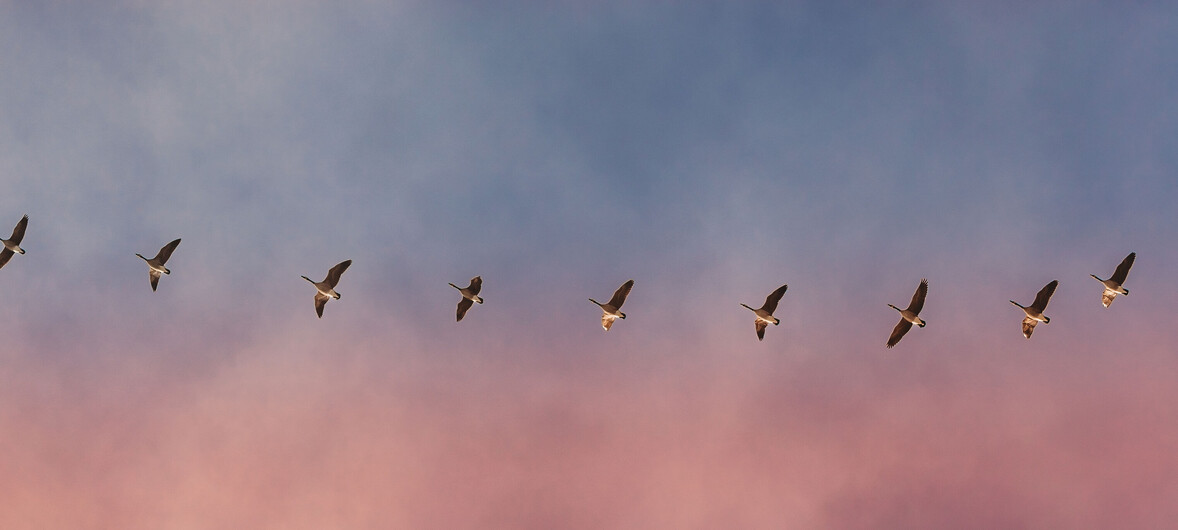
Eeyou Istchee Baie-James Through the Lens of Photographer J-A Dupont
We want to hear you! Fill out the WOW survey and get a chance to win a $100 prepaid card + a regional gift basket worth $100
I have traveled great distances in search of wildlife. Africa and its open plains. Costa Rica and its dense, vibrant forests. The American West and its vast mineral expanses. Each time, the journey begins long before the first image, in the act of travel itself, in that slow inner transition that happens when you leave the familiar behind.
And yet, setting out toward Eeyou Istchee Baie-James, I felt something different. This journey, into the heart of my own country, felt like an even greater adventure.
I chose to drive deliberately. Not to save on a flight or out of a simple love of asphalt, but because I felt it was the best way to gradually enter a territory I did not know. Driving north means accepting a slower pace. The kilometers stretch out, gas stations grow scarce, landscapes simplify. You gradually leave behind the world of tight schedules, notifications, and certainties. Silence settles in. The way you see things changes.
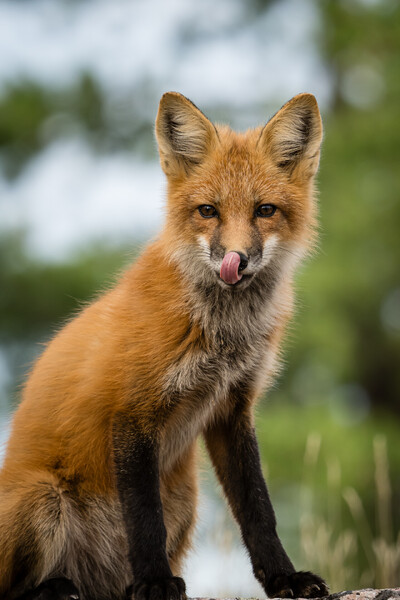
Red Fox | Radisson
Entering Eeyou Istchee by Road
As I drove north, anticipation grew. I was heading toward Eeyou Istchee, the Land of the Cree People. A vast territory, inhabited, lived in, passed down through generations. I was of course eager to discover the wildlife, to observe the birds, to scan the shorelines and bodies of water. But I was just as eager to understand the territory through the people who live there, who travel it, who know its rhythms.
This trip did not present itself as a simple photography expedition. I already knew it would push me out of my comfort zone. That I would need to accept not being in control of everything. To work with the weather, the distances, the unexpected. To position myself more as a listener than as someone taking action.
The further north you go, the more the land sets its own rules. Wildlife here does not reveal itself the way it does in destinations we spontaneously associate with safari or spectacular abundance. It is present, but never guaranteed. It hints at itself, appears in fragments, it accompanies the landscape rather than dominating it. Seabirds, caribou, foxes, and large raptors are part of the scenery in the same way as the wind, the raw light, the banks of fog, or the sudden shifts in the sky.
It is the land that leads the dance.
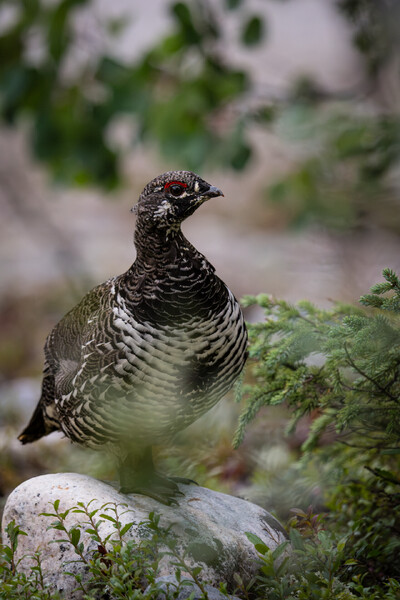
Canada Grouse | Wemindji
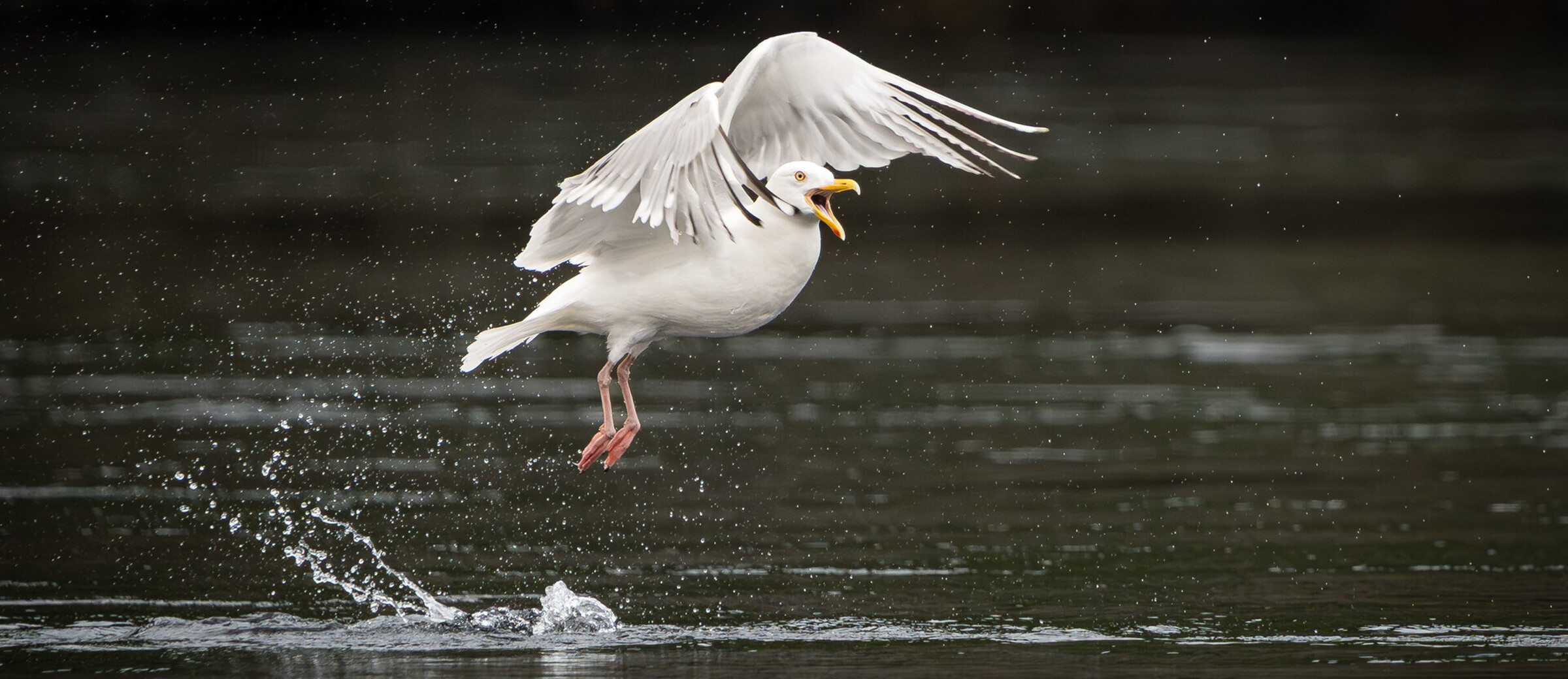
Ring-billed Gull | La Grande River
Nibiischii : observing at the Pace of Water
Before reaching the bay, I stopped in a vast land of water and rock, north of Chibougamau. The Nibiischii Wildlife Reserve marks an important transition in the journey. You enter it the way you change tempo. Here, water is everywhere. Lakes, rivers, and inland bays shape the landscape and dictate movement. The territory is immense, yet never empty. You sense that it is inhabited, considered, managed with care.
I spent a few days there, settled in a floating cabin, literally surrounded by water, light, and silence. Days began early. From dawn, activity would settle in gently. On a rocky islet, a colony of terns animated the space, the adults flying tirelessly above the lake to feed their young. Further away, herons occupied the tops of conifers, landing with an almost ceremonial slowness. An osprey, watched over by a large raven, observed the scene from above. Along the trails, a few ruffed grouse let themselves be surprised, confident, almost curious.
At Nibiischii, everything plays out in duration and attention. Days stretch naturally, without urgency, and observation becomes a calm, almost meditative practice. You learn to look for a long time, to let the territory tell its story at its own pace. One evening, at the blue hour, a solitary loon glided across the still lake. A spare scene, of great power. Here, photography is not a capture, but an encounter. A way of being fully present to what reveals itself.
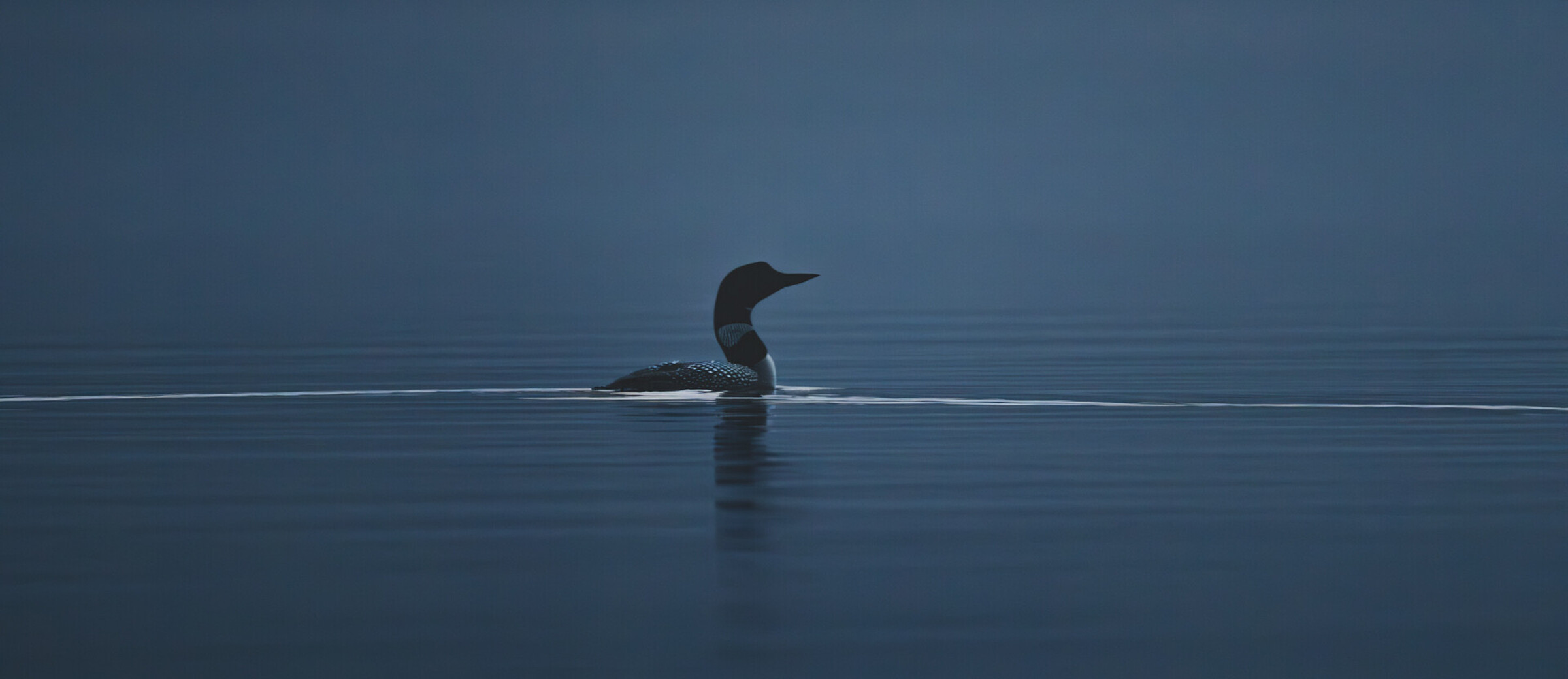
Common Loon | Waconichi Lake - Nibiischii
Wemindji and James Bay: Navigating at a Cree Rhythm
Continuing north, the sense of crossing into something else grew stronger. The distances lengthen, the villages grow further apart. In Wemindji, on the shore of James Bay, I was welcomed with a generosity and simplicity that leave a lasting impression. Here, the connection to the land is direct, daily, lived.
I met the captains of Wiinipaakw Tours Solidarity COOP, men of the sea, guides of the bay. With them, I understood that navigating these waters is not merely a technical matter. You must know how to read the wind, accept the swell, respect the sea's decisions. Of several planned outings, some were cancelled. Only a single half-day on the water was ultimately possible. And that constraint gave the moment lived its full value.
On the water, among the islands and wind-battered shores, wildlife revealed itself in touches. A group of caribou on a distant island. Birds hunting. Silhouettes that serve as a reminder that this territory remains wild, mobile, untameable. The light was harsh, vibrant, distinctly Nordic. It did not matter. We were there, fully present.
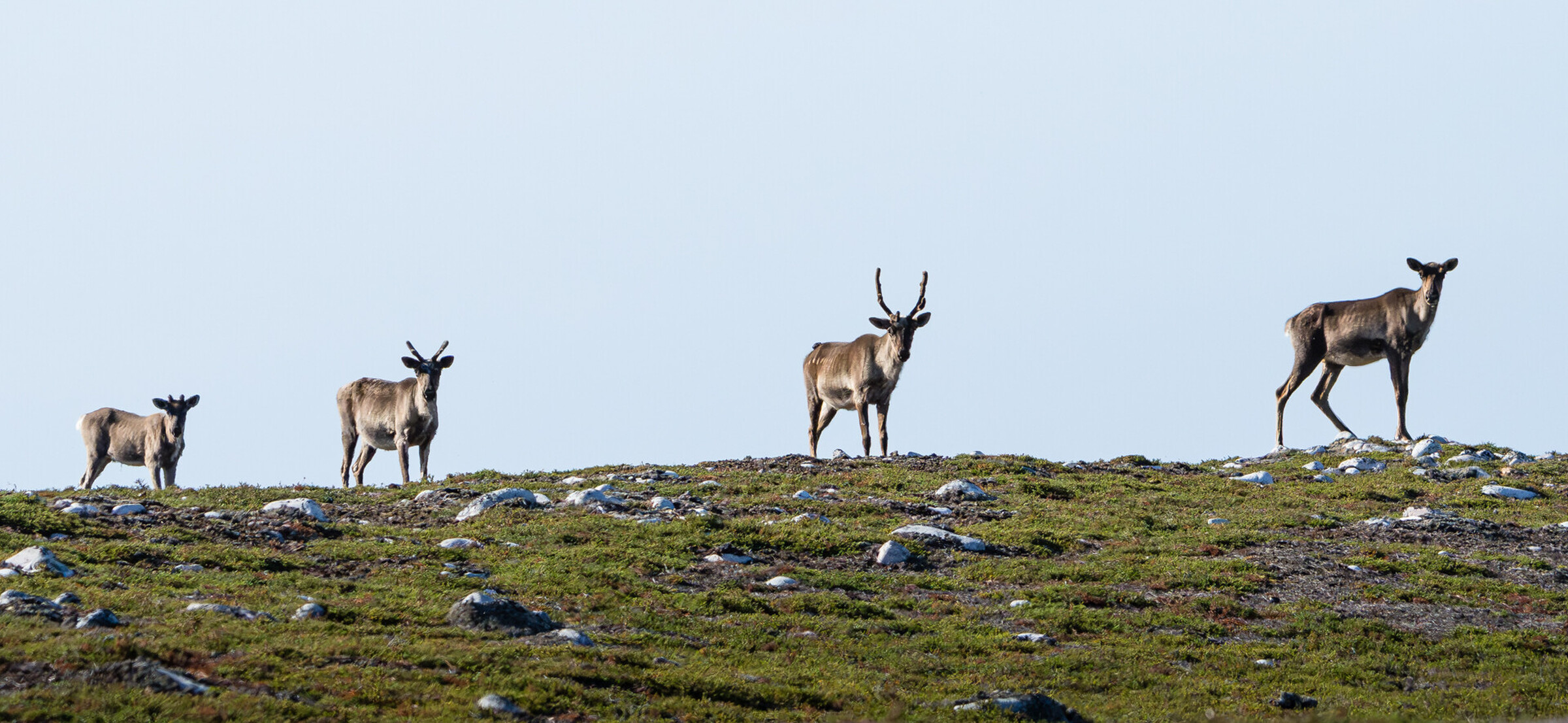
Caribous | James Bay
Chisasibi and Radisson: Wildlife at the Edges of Everyday Life
Further north still, I drove to the end of the paved road, to Radisson. Here, wildlife slips into the margins of daily life. Foxes move freely, sometimes near homes. The boundary between wild and inhabited seems more porous, more accepted.
One evening, hoping to spot a wolf, it was a young fox that appeared instead. Curious, playful, almost complicit. I took the time to step back, to give it space, to wait for the light. The moment built itself slowly, without urgency. That is often how the North offers its finest scenes.
From Radisson, I made a detour to Chisasibi. The High Ground site, developed as a refuge area for the community, now offers beautiful trails. You walk calmly through forest and along the river, and wildlife sometimes lets itself be approached. Boreal birds, hares, quiet tracks in the ground. On the road leading to the site, an osprey nest perched atop a pole is a reminder of the attention paid to coexistence with living things.
At the tip of the point, facing the La Grande River, the landscape shifts with the tides. The water rises, retreats, uncovering temporary islets where terns and shorebirds bustle. The territory transforms before your eyes. Nothing is fixed.
The North Is Not Something You Consume
Leaving Eeyou Istchee Baie-James, one certainty took hold. Adventure does not depend on the distance traveled across a globe. It depends on how you enter a territory. On the humility you are willing to adopt. On the space you leave for the unknown.
I already know I will return. Often. By road, again. Because this North is not something you consume. It is discovered slowly, layer by layer. And because with each return, I feel that it is not only the territory I am exploring, but also my own limits, my expectations, my way of being present in the world.
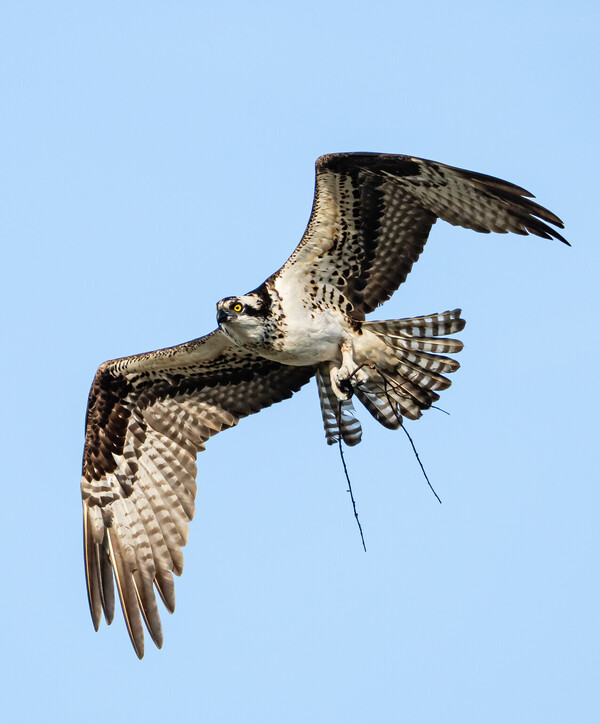
Osprey | Chisasibi
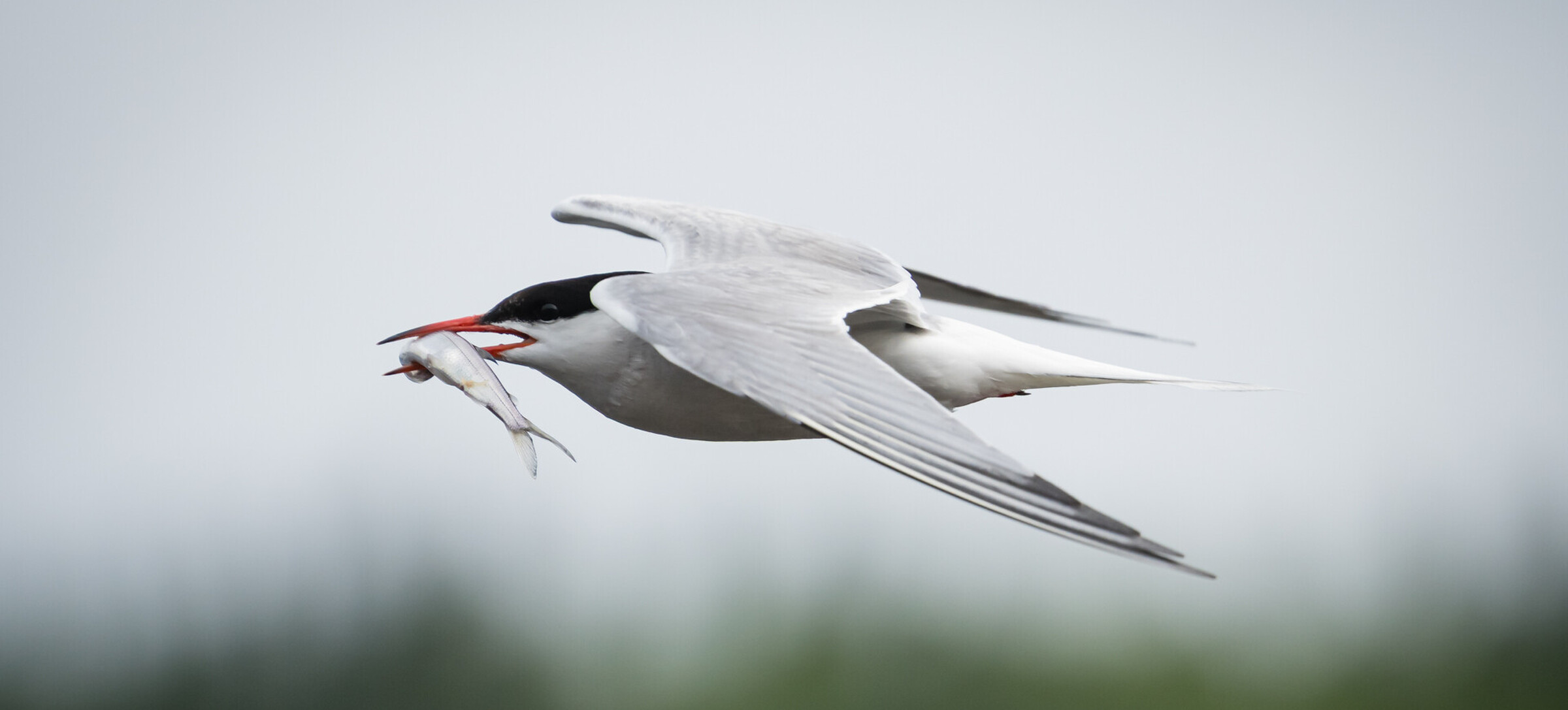
Common Tern | La Grande River
Jacques-André Dupont
https://www.jadupontphoto.com/
A wildlife photographer based in the Eastern Townships, Jacques-André Dupont has been published in National Geographic, Canadian Geographic, and Paris Match. His work, exhibited from Montreal to Tokyo, puts the beauty of the wild world in service of conservation.
News
Mr. Sansflamme's Little Guide to Enjoying the Territory Without Playing with Danger
Thursday, July 9, 2026
5 Must-Do Hikes in Eeyou Istchee Baie-James
Thursday, June 25, 2026
5 Good Reasons to Visit the Eeyou Istchee Baie-James Region This Summer
Tuesday, March 24, 2026
Stop Making These 5 Winter Mistakes.
Monday, January 26, 2026
A Few Gift Ideas That Are Anything But Boring...
Thursday, November 27, 2025
Eeyou Istchee Baie-James Among the World's Best Destinations According to National Geographic
Wednesday, November 5, 2025